
Taking Flight with Wise Goose Coaching

We are delighted to share Wise Goose graduate, Julia Forster’s coaching story. Julia coaches emergent and established writers and offers writer retreats in the Writers’ Cabin. Here at wise Goose we don’t believe ‘one size fits all’ when it comes to coaching, and definitely don’t want our programme to be a ‘coach sausage machine’! So during our training we encourage students to find their own coaching voice and niche – Julia has done exactly that.

After spending twenty-five years working in writer development and publishing alongside my professional creative practice, becoming a fully qualified coach now seems like an obvious and natural progression. However, it wasn’t until the first lockdown in 2020 that I was able to articulate that goal to myself – and it took sitting still for me to tap into the bigger vision.

During that first, long lockdown, I took part in a week-long ‘Work that Reconnects’ virtual retreat informed by Joanna Macy’s work. I was able to tune into the very particular frequency of the square mile I live in, just outside Machynlleth, mid-Wales. 

As part of the retreat, we were encouraged to meditate at a sit-spot and reflect on how our skills might meet the world’s deep hunger. I chose to meditate by the river Crewi which trickles along the bottom of the valley, and it was there that I struck upon the idea of training as a coach and specialising in working with authors.

After the retreat, I signed up to a virtual ‘Introduction to Coaching’ course offered by Cult Cymru. During that course, I realised just how pertinent and powerful the modality of coaching could be within the field of writer development.

As a young writer and graduate of both Undergraduate and Masters programmes in Creative Writing, we were taught about craft and technique, but it was rare for students to discuss the habitual challenges jobbing writers face: writers’ block, procrastination, the inner critic, imposter phenomenon…

After just six practice hours of coaching, I could already see how apt an intervention coaching was for authors facing these challenges, and many more besides.

My next step was to take a qualification in the Analytic-Network Systems approach run by Dr Simon Western. I completed that course fired up with a desire to fill in the gaps in my knowledge and to lay a firm groundwork within my portfolio of coaching skills.

Attending several introductory sessions for coaching schools, it was the Wise Goose School which stood out, not least because Helen Sieroda, who directs the programme, had given up her Saturday morning to run the session herself.

Additionally, I’d always wanted to visit Findhorn, a community not unlike the Centre for Alternative Technology which was one of the reasons I’d chosen to move to Machynlleth. Findhorn was where our Foundations course was to be held – but sadly another national lockdown intervened. Despite that, the fact that Wise Goose used it as a venue signposted to me their organisational values, which I felt were closely aligned with my own.

The gestation and articulation of my new outfit Write Within during the Wise Goose programme was an iterative process which ran parallel to my training. As a creative writer, reflective practice wasn’t a foreign concept to me, and bringing this into the realms of business development – a creative act in itself – helped me to overcome various blocks and challenges along the way.

I wanted the concept of Write Within to encapsulate all of my passions within writer development. This meant an offering that wasn’t necessarily going to fit into a conventional idea of a coaching programme. I wanted to bring a unique blend, something Helen actively encouraged us to reflect on and to discover for ourselves. I also resisted the idea of becoming ‘too slick’, and instead preferred to stay as authentic as possible.

Getting to know the coaches Jackee Holder and Fi Parashar, author of A Beautiful Way to Coach, at a weekly women’s co-writing group they co-facilitate inspired me to strike out with something a little bit different. I also took my lead from the Chuckling Goat entrepreneur Shann Nix Jones who offered a fantastic 13-week online course to accompany her book How to Start a Business from Your Business Table which I read and followed assiduously.

As I burrowed deeper into my particular field and developed my coaching business, I realised I wanted Write Within to:

  • Offer author coaching packages which replicated the soulful approach of Wise Goose
  • Share in the abundance of the Dyfi Biosphere we are lucky enough to call home by building a physical retreat space where guests could write their works-in-progress in peace
  • Give back by creating an annual writer’s residency for a writer of minoritized identity

Meanwhile, the woodland opposite our plot of land was ear-marked for felling due to the spread of the phytophthora disease which was threatening larch trees across the country.

To build the Writers’ Cabin, we put our names down for several tonnes and processed the wood on-site into planks which formed the bulk of the construction of the Writers’ Cabin and spa-inspired shower room and sauna.

I started to dream into what kind of space might unlock and foster creativity, and how the conditions inside could support a writer on retreat. I didn’t need to turn far.

In nearby Bishop’s Castle, Shropshire, the Poetry Pharmacy sold not only items for me to accessorize the Writers’ Cabin with but also, very generously, they offered a space in which I ran two six-month and low-cost Coaching Clinics for Creatives. I completed 18 hours of my portfolio coaching practice within the Pharmacy – which now boasts an outpost on Oxford Street, London, in the flagship Lush cosmetics store.

The support of my Learning Group continues beyond achieving the Advanced Coaching Diploma – the four of us still meet monthly and I suspect we are likely to meet for many months to come. I couldn’t have achieved my goal without the support of Annette, Alan and Vicki. We held each other gently accountable and cheered one another one throughout our journey with Wise Goose. We’ve taken flight together.

About:

Julia Forster coaches emergent and established writers of any genre who have a committed writing practice and offers writer retreats in the Writers’ Cabin. Potential clients can book a free 30-minute initial conversation to discuss their author coaching needs via this page: https://writewithin.wales/coaching/

Learning to walk

Here’s the latest post from Wise Goose graduate Helen Tyrrell. Her topic feels timely as a cool April, month long storm in May followed by just enough warmth and rain (though not much sun here on Dartmoor until last week) means this year growth on my allotment has galloped away so it now resembles a jungle – lots of happy nettles, bindweed and giant comfrey. Produce a bit hard to find under all the green.

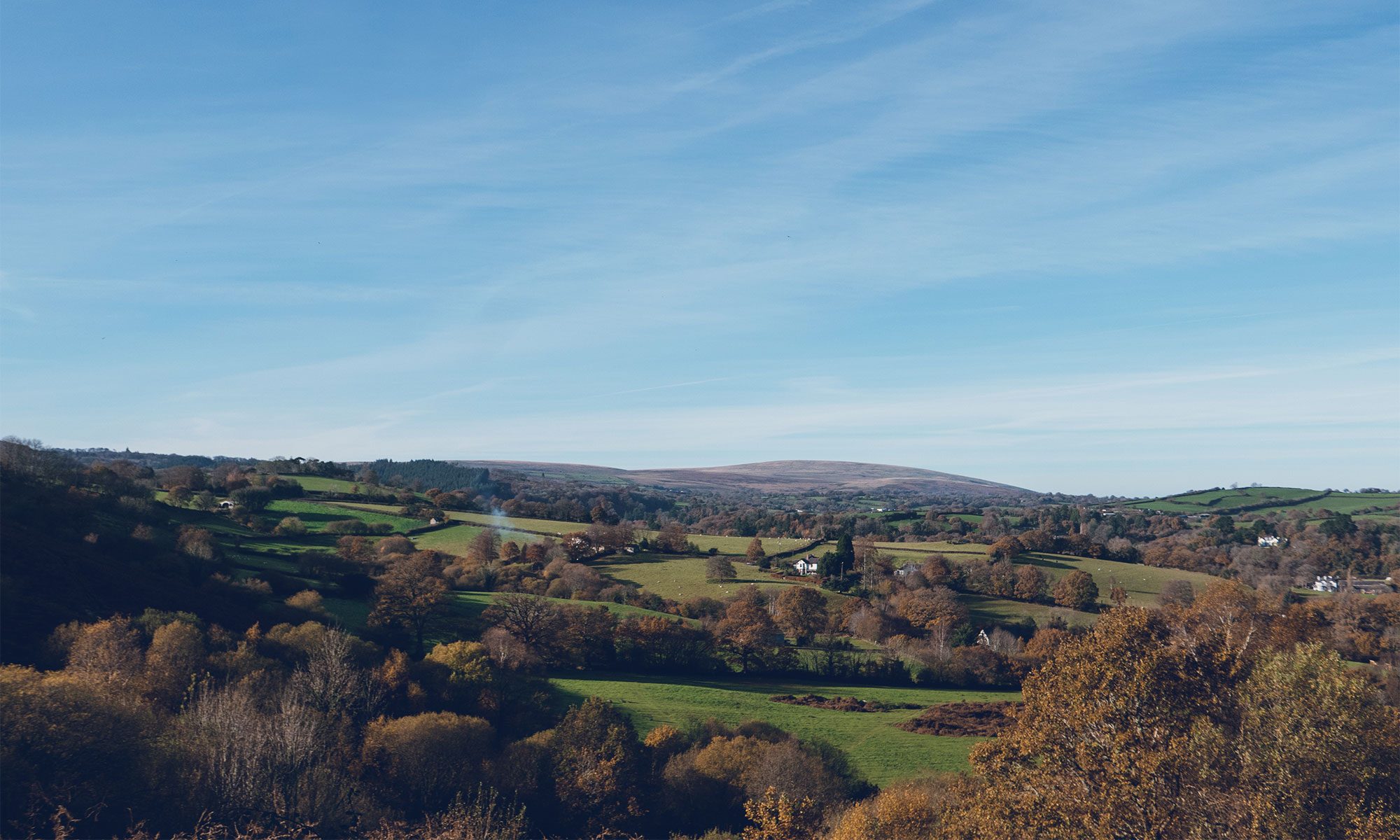
Here’s a image from the allotment walk Helen T. mentions in her post. Taken before the growth exploded!

“You were running before you were one year old!”  That information has long formed part of my personal mythology: according to my mother not only did I run before I had learned to walk, but I would run everywhere on my tiptoes.

So it seems my early entry into movement was headlong, fast and barely in touch with the ground!

Has that approach continued into my adult world? In a way, yes! I have sometimes rushed headlong towards what excites or interests me, while keeping my feet steadily on the ground has not come naturally.

Let’s be kind and call it a hunger for life!   

The busy, ‘always on’ culture around me seems in some ways an extension of that running, rushing, action-oriented, unbalanced way of being. Somewhere hidden in frenetic activity is not just a high-energy, excitable sense of achievement – of impact in the world – but also a sense of virtue: we can’t be lazy if we are busy! In there, too, is feeling of self-importance: even as we rail against how busy we are, there is often a smidgeon of hidden pride – after all our busy-ness signals we are in demand!

A significant learning for me with Wise Goose was a session where all this was turned upside down. Our tutor, Helen, did an amazing thing: she walked us through her allotment, slowly, through the seasons, using photos and simple narrative.

Gardening is something that you can’t rush!

In the changing seasons and viewpoints were dramatic transformations – and not all wrought by the gardener. In fact compared to the action of time, the environment and the varied potential of each plant, the gardener’s interventions were relatively small. Furthermore the different camera angles dramatically changed the scenery.

How is this useful learning for us as coaches and as people?

Well, it helps us to appreciate the important role time plays in personal and professional development, as well as the unpredictable impact of other factors. An awareness of these interrupts any over attachment to results: if we, like the gardener, plant seeds then this may produce intended outcomes, but not necessarily. We need to see our own efforts within the context of the wider environment, the seasons – metaphorical or actual – the time it takes to grow, the unique potential and stage of development of both ‘seed’ and ourselves, the ‘sower’. And we need to be aware that the perspective, the angle we are viewing our ‘garden’ from may alter the way we see it.  

Germination happens invisibly under the ground and seeds take time to grow. By the same token, dramatic displays of beauty and growth may happen with very little intervention if the time is right.

So our results are not just down to us. ‘Not really’, as Helen S would say. Whatever we are trying to accomplish, that is something to remember.

The gardener approach calls for a slowing, for staying in touch with the ground and watching for what else is going on. While there is nothing inherently wrong with impatience and energy for movement, as with the infant, the fast-and-barely-in-touch-with-the-ground approach is unsteady and may lead to a fall, while slow observation, considered movement and steady step by step progress that factors in the importance of time in development can produce surprising results.

So while I may have run early as an infant, it is only now, as a coach, that I am really learning to walk and enjoy each step!

Hitch your Wagon to a Star

Here is the next instalment about her journey from student of coaching to professional coach from a soon to be Wise Goose graduate Helen Tyrrell (just waiting for her portfolio to be signed off by our external verifier.) We’ve had some great feedback about this series and hope you enjoy reading.

Major milestone 1: I submitted my coaching portfolio two weeks ago! Major milestone 2: my creative living pilot programme, Play Ethic: A Creative Way, has run with 5 wonderful participants and a fab co-host and guest speaker, ready for Hawkwood College in June.

For the first time I am beginning to appreciate just how far I have come since late 2018, when I lost both my father and my job at exactly the same moment. The truth is that the job and I had outgrown each other, and my father, a Jungian Psychoanalyst, and a person dear to very many hearts including mine (working right up to the day he died aged 89) was unwell and not getting any better. I’d have clung to both.
It may have been a bumpy ride, but at last I find myself at a vantage point from which I can fully appreciate the scale of what has been going on for the past few years.
I am launching as a coach, having found work and a lifestyle that deeply fulfils me, with its own unique rules of play. That feels big!
I’m not exactly like every other coach. The rich seams of Processwork weave their way in, as clients show up wanting to explore their dreams and symptoms. Creativity, too, has taken on a mantle of manifest relevance beyond my own practices (which remain very important and alive) and the other rich areas I am immersed in through my own research clamour for attention, signalling their relevance to my new found work and play. I may not be quite there yet, but let’s pause for a moment to take in the view, looking, as does Hecate, the ancient goddess of boundaries, crossroads and hidden things, behind, now and ahead.
Behind I can see my journey to this place and feel gratitude for all its challenges and twists and turns. In the now I see a different me, changed by that path behind, at last ready to look ahead unencumbered by fear. It’s time to ‘hitch my wagon to a star’ and to trust in that destination whatever the journey brings.
For me, that star or destination involves helping people access their own deep resources and move closer towards their authentic selves, bringing their unique gifts to the world. It means holding space too, for grief, pain and difficulty and encouraging the deep meaning behind these to emerge, blinking, into the light. It means reaching out through creative programmes such as at Hawkwood and through one to ones.
As I think about positioning I find that my own experience of midlife shocks and changes means I’m drawn to help others unravel the meaning and message in the bumps in their own roads. For example, redundancy and loss may be indicators of unknown gifts and talents waiting to be brought to the world, while the experience of not fitting in may indicate a need for new ways of being, relevant not just for the individual, but contributing to the evolutionary leap we, as a species, are trying to make, towards more creative, sustainable living: showing others the way. A star waiting to be noticed!
So, what is going on for you? What is really going on? Have you experienced any bumps in the road lately? How might you respond to those creatively? To explore that further, join us for the Hawkwood course in June, or give me a call and let’s see if we can unravel some of the meaning in that bumpy ride and- even – find a surprising and fulfilling, creative way forward.

Clients, Sweet Spots and Values

Here is the next instalment from Wise Goose student Helen Tyrrell on her journey to becoming a coach. She’s celebrating new clients arriving, one through Wise Goose ‘Find a Coach’ Directory, and getting to grips with self-employment with the help of a friend. She has had some great feedback on previous posts, so do read on…

So, things roll on…. and over the last five weeks I have had the privilege of undertaking a pilot 5 step programme to ‘authentic self-employment’  led by one of my fellow Wise Goose students, Mhairi Mclean.

Many big questions for me were addressed by this short programme and my impossible mountain now looks- well sort of more achievable – maybe. I find I am also less attached to outcomes. The element of fear seems to have dropped out, and, gradually, new clients are beginning to arrive. Of course there are a thousand unanswered questions and things are still as precarious as can be, but I have begun to feel a change. So what has happened?

I can’t reveal all in a dramatic gesture because it is something about the way the course was delivered that has reached me. However I can reveal some learning about the art of exchange: exchange of ideas, thoughts and listening: authentic conversations. If business is a dance between your own needs, talents and skills, and the needs that the world brings to you, how do you navigate that spot? One answer is by bringing your authentic self to every conversation and by listening: both practices which work well with coaching – and which help me understand what is going on out there, beyond the limits of me, in a very real way. Any needs that show up in those conversations do so in a very personal, specific way rather than being faceless, guessed at, generalised, so it is easier to recognise where and if I might help. I also have the chance to become the client when I meet a person or service that fills a need of my own. Everybody wins.

The other part of the programme that has me still mulling is the area of my chosen business values:  balance, courage and financial sustainability. Thinking though the value of balance has required some deep reflection. What does balance mean in a business context? For me balance means not working all the hours God gives! it means occasional fallow days in the working week,  time for my creative projects, for my friends, time for care of body and for proper care of the ‘household’, our immediate environment– a true ‘ecology’, where we remember that eco once meant ‘household’ in Ancient Greek. The sort of balance that allows me to give of my best and most creative self to my clients, rather than a burnt out shell.  It is easier said than done. Our ‘always on’ culture of perpetual summer is deeply ingrained in many of us, myself included. It’s also more radical than it might sound. Received wisdom says work ethic is rewarded. My creativity workshops were called ‘Play Ethic’ to remind myself of the value of play time…. and yet, still an inner critic harps on, dismissing this approach as frivolous, lazy, entitled, privileged, out of touch with reality, with necessity. Is it? And if yes, how impoverished are our lives by this? How do we navigate the tension between said necessity and, well, life?

Maybe that goes to the heart of my coaching practice as well. It is said that you are best placed to teach what you yourself have had to learn – or in my case go on learning. If you too feel that your best life choices are also often assailed by that inner critic, or that you face a tension between necessity and your lifestyle of choice perhaps we could explore it together through coaching? There is much richness and relevance to your struggles and they have a significance beyond you, to the culture we live in. Maybe you would like an open, free, unstructured  conversation to see if we have a sweet spot exchange of skills or money? Or maybe you’d just like to talk – I know I would! Drop me a line!  And of course if you want to know more about Mhairi and Business and Freedom and that amazing 5 step programme, drop me a line too. Who knows she may run it again before too long!

Image by Helen Tyrrell

Is it (really) OK to be vulnerable as a coach?

Here is another instalment from Wise Goose student coach Helen Tyrrell, as she treads the ‘narrow path between vulnerability and expertise’. This is a paradoxical topic, rarely discussed in coaching and we wish her well on her way to becoming a vulnerable expert.

As well as being a coach, Helen is Processworker and Creative, with a background in Art, Business Operations and Human Resources, you can find out more about her work atwww.consciousorganisations.com I hope you enjoy her post as much as I did, and do leave her your comments.

I had some nice feedback about my previous, opening blog for Wise Goose. Getting to this point has involved rigorous training:  a minimum of 60 hours of independent coaching practice, over 125 classroom hours, and closer to 200 private study hours, plus peer and professional supervision, much reflective work and an extensive portfolio to submit. In an unregulated industry this is a far cry from a 2 day online coaching course and launch!  This is a serious undertaking.

As I organise the records of my 60 hours of client sessions for my portfolio, I can see my progression, my tendencies and weaknesses over the last year and a half, but also my strengths, talent and commitment to coaching practice. An absolute cornerstone of the Wise Goose training is honest, self-reflection. No sugar-coating. No overblown claims. We need to be like a clean pane of glass, unmuddied, as far as possible, by our own automatic triggers and responses – or at least able to recognise and ‘bracket’ these where possible – so as to respond to the client from our own best place. This requires a high level of self-honesty.

So, I had nice feedback about my blog. And people said it was vulnerable. Is that a good thing? Was it too vulnerable? Too honest? Should a coach not, by definition, be somebody supremely sorted? Where does vulnerability feature in that? After all, I have many years of experience, many qualifications and much training – should I have focussed on all that rather than on the real, raw edge I find myself at? Maybe. But if I did that, my blogs would be a marketing exercise rather than a genuine point of interest. Not a bad thing, but a different thing and to my mind less valuable here.

Vulnerability seems to be fashionable these days. We are encouraged to show it, as leaders, as coaches – and we all know it is easier said than done. Sometimes we get around this by showing it after the event, from the luxury of a safe place.  As in… when I have so many clients that I am turning them away, say, then I can be vulnerable and admit that launching was challenging! Hmmm – question: can vulnerability ever be in the past tense? Can you really show vulnerability from a safe space? Vulnerability, by definition, isn’t safe! Maybe I was mad to allow it into my writing given the need for robust certainty at this delicate juncture.  

To be sure, coaches – and other professionals – don’t, in my experience, much like to show vulnerability. At the very least we prefer to bill ourselves as the expert, and there are some coaches who like to trade on an air of guru-like wisdom. There seems to be a slightly bogus cult of personality in the wider coaching field that I perceive is generally absent from its sister profession of psychotherapy, which relies instead on training, professionalism and self-awareness – the same skillset that we need to be good coaches. Yet perhaps because coaching works on fewer and less regular hours per client, over shorter timescales, and is more associated with business than medicine, coaches need to attract clients differently. We have to get smart. We find our niche. We choose to appear in our ‘expert’ role. And that’s no bad thing – why should anyone buy a coach’s services without proper kudos and credibility?

Yet here’s the thing: what makes us experts is lived experience, so being open and vulnerable about that needs to be part of what we do. And here’s the other thing: in our industry it is the client who is the real expert: they are the expert in their own lives! What the coach brings is training:  listening skills, self-awareness, ability to question, knowledge of a few useful, effective techniques to prompt insight and change and, above all, interest – in life and in the client. We know the client has all the tools and expertise to rise to their challenges creatively, and it is that expertise we are interested in getting at.

So as I launch, I find I am treading this narrow path between vulnerability and expertise, mostly zigzagging from one side to the other unable to stick to the sweet spot I’d like, but then, that’s life!

So, is it really OK to be vulnerable as a coach? I still don’t know, but I’ll keep you posted! For now, I have a portfolio to complete…..

Edgy Living

Thanks to Wise Goose ‘almost-graduate’ Helen Tyrrell, for this post as she stands on the edge of a threshold about to step out as a qualified coach. We look forward to hearing the next instalment! If you’d like to find out more about Helen she is listed in our ‘Find a Coach’ coach directory https://wisegoose.co.uk/listings/helen-tyrrell/

So here I am, on the edge of qualifying as a coach! Assuming nothing goes wrong, I will soon be the proud owner of an Advanced Diploma in Coaching and Mentoring.

Great! I’ll be fully qualified! And…then what?

It’s been a fascinating journey, and I’ve had the best clients in 2020. But the last few of my clients are finishing shortly and I don’t have any more lined up. That is where the uncertainty begins to creep in. How can I make a living doing this thing which I love?

I spent many of my younger years being driven, especially when I wanted to be an artist, believing I could make things happen with passion and determination, only to discover that what life had in store for me was far more interesting and rich than I had dreamt, but that I had first to let my dreams go as part of the deal. Now I am wary of striving. Instead I attempt to see what wants to come and to accept and celebrate that. And yet, as my supervisor pointed out, if you don’t let people know you are there, how can they come to you? Tricky.

So, how do I get clients? The gremlins of self-doubt gnaw and undermine and a significant (and dangerously powerful) chunk of my thoughts fully expects this not to work. Hello amygdala!!

I set myself a goal at the start of 2020: I wanted the year’s theme to be ‘The Year I’  with a play on the letter ‘I’ and the number ‘1’ to indicate a fresh start. The fuller title was to be ‘The Year I [Believed in Myself] . I wanted to see where I could get to with that simple, confident attitude. If I were to keep that up now, I wonder what would happen?  

It is interesting and significant that I developed a workshop all about creativity earlier last year, which has now run twice. Aptly, I find myself at precisely the sort of creative edge that this workshop is designed to work with: it is a place of not-knowing, pregnant with possibility, delicate, precarious, hopeful. With my creative hat on, my advice to myself is to stay light, and interested in everything that happens, ‘good’ and ‘bad’ as a source of information;  to encourage myself to try things out and to forgive ‘mistakes’;  to make time for creative play as well as for work;  to use alternative ways of knowing (e.g. art, poetry, embodied knowing) and to suspend my usually quick judgment of results: new things, being new, are not easily recognised, and being raw rather than slick, are easy to miss and misjudge. Most of all my advice to myself is to be receptive, collaborative and to say yes.

So, when my supervisor, demonstrating what a great coach she is, picked up on my enthusiasm for writing and creativity, suggested that I generate some creative content about this edgy time, I got interested. Interested in my own experience; interested in a moment of my life that, in fact, merits attention and scrutiny over head-in-sand blocking of unnamed, unacknowledged hopes and fears.

And so a new creative content is born – its parents a conversation and an edgy time. Let’s see what happens next……

Will you make that change?

Advanced Diploma in Coaching


If you are feeling stuck in the wrong career read on – thanks to Wise Goose graduate and career coach Lucy Weldon for sharing her thoughts in this post…

A new year often kick-starts conversations about the future.  You might be thinking about changes that need to be made around your career or your current job.  Time away over a festive period can bring a different perspective.  What matters is action and not letting the months slip by.   Here are some typical predicaments that you may have talked about over Christmas and the New Year period.

Do you continue to grit your teeth in a job you don’t like?   Feeling stuck?  There are a number of factors that influence how you feel about your job.  Here’s a rule of thumb (from Ann Guo, Passion Analytics, USA) for how long you should ‘suck up’ a job.  In your 20’s, it’s four years; in your 30’s, it’s two years; in your 40’s, it’s 1 year; in your 50’s, it’s 6 months. How long have you been in a job that you don’t like?

If you don’t like your job, be clear on the reasons.  And if you’re not sure what they are, go and talk them through with someone, as well as start to explore what you could do.  There’s lots of aspects that could improve your lot before you change job.  But if it is a change that you are looking for, there is plenty of advice available.  Start with friends and family; then go and talk to peers/colleagues or someone who’s recently changed job.  Be positive.  It helps achieve the right outcome.

You’re coming to the end of this particular career path, what else can you do? It’s a great question and so relevant today.   It can also be about a change that is being forced on you.  Are you a specialist?  Have you been in the same company or in the same kind of role for a long time?  You might be a bit rusty when it comes to CV writing and interviewing, let alone looking for a new role.  A bit of courage can also come in handy as well as a proper professional process to look at what you do next and how to manage the transition successfully.  Multiple careers with on-going personal development are the hallmarks of the world of work now and going forwards (The 100-year life. Gratton & Scott).

What are you going to do when you retire?  You still love working.  Well, you don’t have to retire and maybe you can’t afford to retire yet.  Statistics about pensions and the lack of funding in pensions are well known.   It’s important to have an idea of what life looks like after the official retirement takes place and financial plans are made.  Working, keeping one’s hand in, contributing, keeping the finances going are characteristics of our society now.  It can be a great time to consider new opportunities.  PWC predicts that self-employment is a growing trend, over the next 10 years. The Office for National Statistics estimates that around 1 in 5 people aged over 50 is self-employed, a higher proportion than for any other age group.  You might become an olderpreneur.

What’s the advice?

So, for all these predicaments (and others), there is no set piece of advice.  Career advice is bespoke and should be holistic and thorough.

I’m a

‘look before you leap’ kind of career coach when it comes to any major change.  It needs thinking through.  It can be a combination of ‘head’ and ‘heart’ that helps you make a decision. But there is a professional process available.  A coaching conversation will give you clarity, confidence and a much firmer grip on what needs to happen.

There are steps that can be taken to reduce uncertainty about the future. But what I am certain about is that ‘managing uncertainty’ is a skill that helps inordinately in life. It’s the knowing when to push, when to wait and allow luck, the Universe, or whatever to intervene, provided the groundwork is done.

The groundwork takes time and effort.  It’s all about building a sustainable career that addresses your needs today and it’s always good practice to keep one eye on the future.  Don’t wait for a crisis.  Keep up to date by talking to people, know what’s happening in terms of market trends and keep your network thriving.

Lastly, I want to talk about money.  Life is often fundamentally shaped by this.  Terry Waite, once envoy to the Archbishop of Canterbury, was kidnapped in Hezbollah in January 1987 and held captive for nearly 5 years.  In an interview in the Sunday Times recently, he said that his most important lesson about money was that whilst you must make sensible plans for the future, live each day as it comes and live it as fully as you can.  In other words, don’t let financial concerns dominate at the expense of your day to day life.  That’s beautifully balanced advice in my book.

Are you looking to develop a more sustainable career then you have at the moment?  You can contact Lucy lucy@lucyweldoncoaching.com or via www.lucyweldoncoaching.com.

The Climbing Wall – A new way of looking at our working lives

Many thanks to Wise Goose graduate Lucy Weldon for this post.  Lucy is a career coach who specialises in the development of sustainable careers.

Have you thought about what living to a hundred will be like?  It will soon be unremarkable to live that long.  Many societies, including the UK, are rapidly ageing.  There’s lots of discussion about the funding challenge but not enough about the decades that precede our twilight years and what we do with our longer lives.

In the book, The 100-year Life by Lynda Gratton and Andrew Scott, the authors talk about this extended life and working life as being a gift.  It’s certainly a positive way of looking at it.  However, it depends on your individual circumstances.  If you live in the USA without health insurance or you depend solely on the UK government pension with little personal savings, the extended working life is a worrying and onerous necessity.

We’re seeing already that the simple career path of a ‘job for life’ is losing its currency.  The vertical career ladder of ‘onwards and upwards’ needs to change to what I call a multi-staged climbing wall model.  Now, more than ever, we need to look at our working lives differently and to manage them more proactively.   Luck will always play its part, but it won’t necessarily get you to where you want or need to get to.

My focus with clients is on having a ‘sustainable career’; by that I mean having a working life that brings in the required financial reward as well as fulfilment, purpose and balance.  How do we achieve this?  It won’t just happen.

Here are some aspects of career management to think about.  They are not necessarily age specific.  Responses to them will be rooted much more in life stage:

  • Re-framing the working life. Given extended lives, the potential exists to look at our careers differently.  Experts now talk about the career as being a marathon, a long journey, a series of short sprints with essential holding patterns in between. I see it more as a climbing wall.
  • Multiple careers. Because the choices exist and the imperative is growing, we will have a number of careers or career paths. This will require us to be flexible, resilient and creative. And to keep on learning and investing in ourselves and our working lives.
  • Re-thinking your working identity.  ‘I’ve always been a ……’.  That may change and may have to change.  What you will also need is a clear understanding of your skills and strengths as well as the kind of work that you find enjoyable and stimulating as you go through your working life.
  • Work life balance. It’s critical to talk about work life balance.  Will we be like the Japanese and have a word that sums up the worst extreme of this imbalance?  ‘Karoshi’ is a Japanese word that means death through overwork.  The UK is known for its long working hours.
  • Financial reward to fit your life stage and lifestyle. Unsurprisingly, money can dictate conversations about working lives.  It is an important
  • consideration.  Whilst money can be a short-term motivator, poor financial reward is a sure fire demotivator that sets in quickly.  Establishing what you want and need is vital, and it typically changes with lifestyle and life stage.
  • On-going personal development within your current role and the future direction of your career. Finishing your education in your younger years reflects the old working life model.  Investing in you, your future working life and a different career direction may well depend on a period of acquiring new knowledge, skills, credentials and qualifications.  You can’t teach an old dog new tricks?  Yes, you can!

It’s the ‘whole you’ not just the ‘working you’ that needs to be looked at and considered.  It’s also about making our extended lives more a voyage of discovery than a haphazard, hoping for the best kind of experience.  When you have choices, when you can get on the front foot, why wouldn’t you?

Find out more about Lucy’s work at www.lucyweldoncoaching.com or contact her at lucy@lucyweldoncoaching.com


Questionable Intentions – Intentional Questions 

trafficjamMany thanks to Mark Hunt for this post. Mark had recently finished his first training weekend with Wise Goose where we’d been looking at questions in coaching when he had real life opportunity to put the theory into practice!

Recently, after a visit to Wise Goose, I was travelling back to Exeter along narrow Dartmoor roads. I had an important meeting to get to and had allowed myself a whisker’s breadth of contingency to get there on time. It was mid afternoon and the roads would be quiet. What could possibly go wrong?

All was well until I tried to join the main road. In front of the junction was an enormous articulated lorry and in both directions cars as far as the eye could see. It was clear that the lorry was blocking the road, and my first thought questioned what the driver was thinking of bringing that great metal behemoth down these skinny lanes. And then – I realised it was an agricultural lorry and – tail between my legs – wondered who had more right to be there. Continue reading “Questionable Intentions – Intentional Questions “

Help Others. Help yourself.

helping others

Many thanks to Sarah Dawkins  for this post. Sarah is a graduate of the Wise Goose Advanced Programme and  works as a Confidence Coach here in the South West.

If your confidence stopping you from taking those steps to getting where you want to be in your life or work then confidence coaching is a great opportunity for you to work towards overcoming areas that are being hit by lack of confidence, be it that interview, talking to people or making that speech.

Something has got to change.

That was the thought that had been buzzing around in my head for 2 years before I decided to actually take action with my life; before that, the nagging thought was just something to squirrel away in the back of my mind to revisit when I reached that magical state of having time to think about it. Continue reading “Help Others. Help yourself.”