
New beginnings often arrive quietly.
We’ve just passed the equinox and the first three months of the year have seen new beginnings for me. So far, I’ve stepped out into three very different spheres.
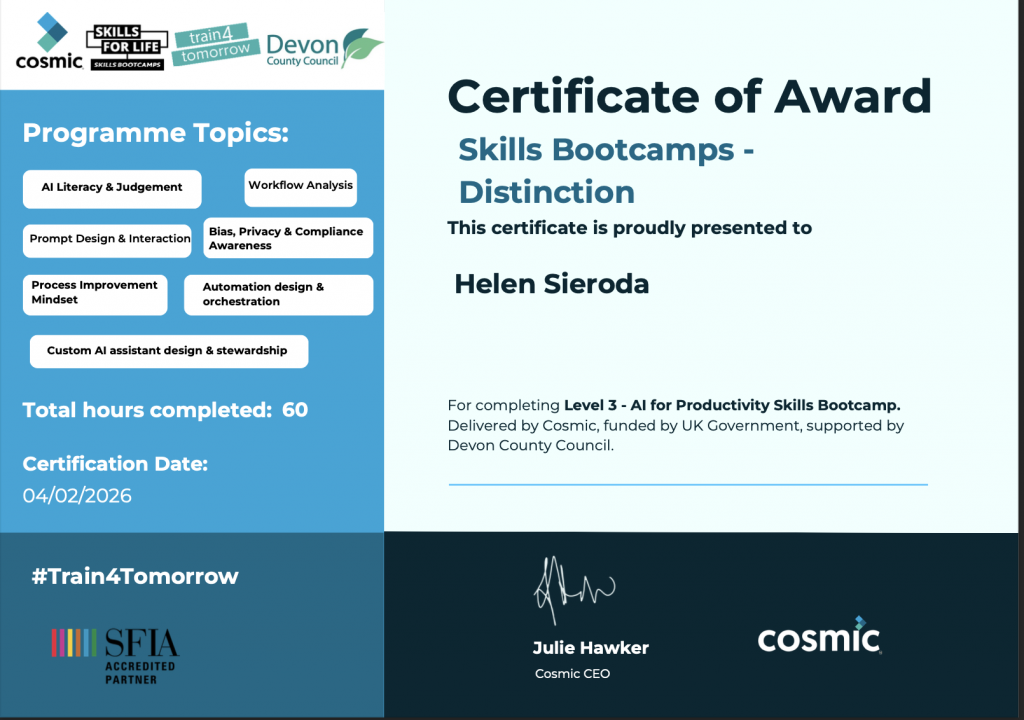
The first is digital. In January, I joined Cosmic Digital’s AI Bootcamp. If I’m honest, AI has never been my natural habitat; tech is not my first love. But AI isn’t going away, and I realised that if I wanted to decide how (or whether) to use it, I needed to understand it. The course was a big commitment, a whole day a week online for nine weeks, plus a capstone project to ‘cap’ it off.
To my surprise, every week brought a sense of enjoyment and, more importantly, a sense of responsibility. The ethical questions, about transparency, accountability, bias, the fragile line between support and contagion, and the importance of keeping the human touch throughout feel deeply relevant to the work we do in coaching and leadership.
An unexpected bonus is a surge of creativity, supported by AI. I really didn’t see that coming. Using AI to take some of the donkey work of research has opened up space and time for me to innovate and play with developing and ‘weaving’ ideas.
The other beginnings are more tactile.
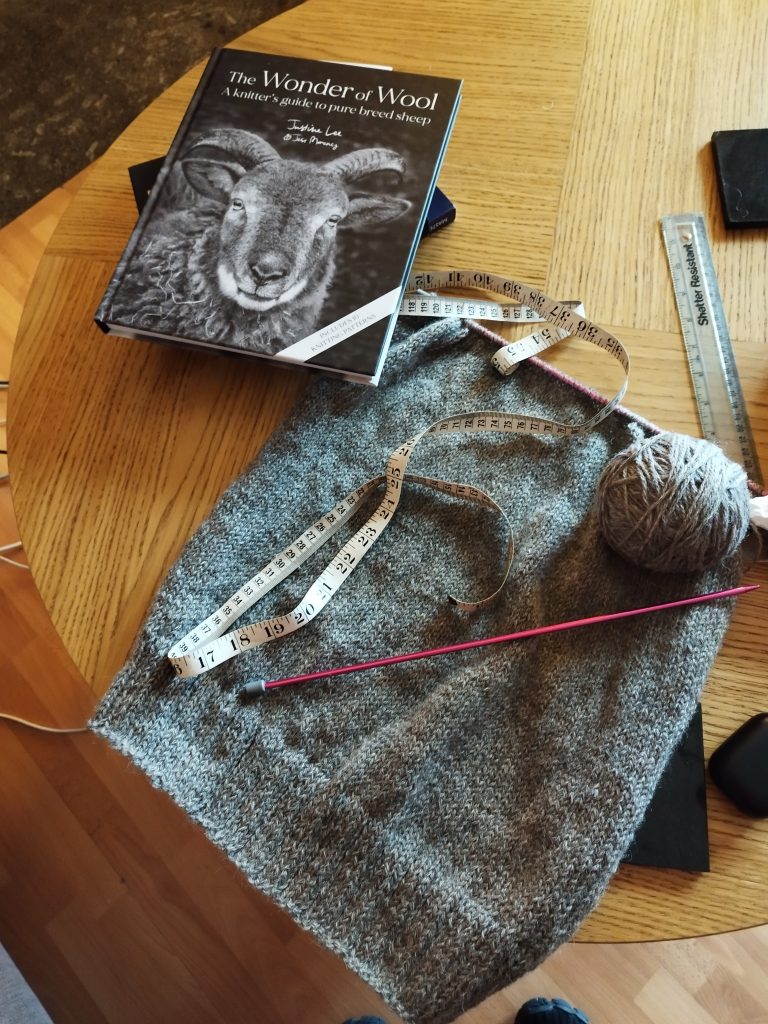
After decades of not lifting a knitting needle, I’ve returned.
In December my son said he’d like a sweater for Christmas, a slouchy Aran ‘Harry Met Sally’ style, and I found myself saying ‘I could knit that’ only to realise that I probably couldn’t. Then he gave me a beautiful book for Christmas, ‘The Wonder of Wool’ and something in me stirred.
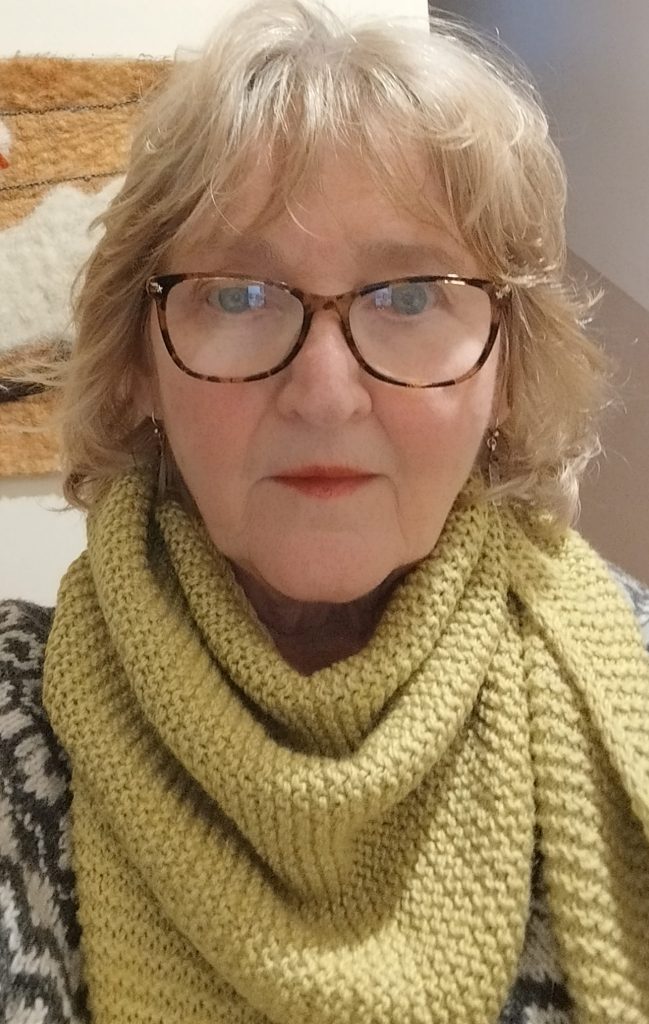
A scarf, a shawl (in the picture) a hat knitted on circular needles (my first outing into knitting ‘in the round’), and an almost‑finished gilet later, I’m finding joy in the slowness, the texture, even the mistakes. For the gilet I chose Leicester Longwool one of the UK’s rarest native breeds. I like to thought of supporting the breeder and spinner who supplied the skeins.
I also began an art class. Let’s just say that what appears on the paper bears only a passing resemblance to the idea in my head. In one class I drew a sheep in pastels. In another a bright watercolour parrot with a leg in the wrong place. They are….. interpretive. But it reminds me that curiosity trumps competence when we are learning.
Meanwhile AI is everywhere, increasingly intimate, misunderstood and misused. AI is a tsunami sweeping into every corner of society and organisational life faster than we can assess its impact or make informed choices about how to use, or regulate its use. There’s a leadership drag in organisations and governments, accumulated years of avoiding foundational questions about purpose when it comes to installing the latest ‘solutions’. It’s leaving a deeply troubling empty hole where wise governance and responsibility should be.
AI doesn’t fix that, it exposes it.
A couple of months ago a Linkedin post by Laurence Barrett caught my attention. He pointed out something that should be obvious but clearly isn’t in the current wave of AI enthusiasm: AI is not a person. It does not have empathy, intuition, or a nervous system. It cannot form a relationship. It can only simulate one, and we project the rest.
This simulation is seductive. It mirrors us back to ourselves, fluently, instantly, without need or boundary. It is, as Barrett puts it, like Narcissus at the pool: captivated by his own reflection. With AI we run the risk of falling in love with our own projected brilliance, never noticing that the “other” is empty, indifferent, and incapable of reciprocity. Meanwhile, our genuine relational capacities, empathy, presence, discomfort, could fade like an echo.
Years ago, when I was teaching psychosynthesis therapists in Sweden, one of the topics I designed was ‘Everyday Narcissism’. We used myth as a springboard for exploring the spiritual path as a journey from ‘the narcissism of everyday life’ towards awakening the soul to ‘Being’ and ‘Interbeing’. We would explore the vulnerabilities and patterns we all fall into that feed our narcissism and cut us off from experiencing connection. It was rich and challenging and I loved teaching it.
Echo is often left out of the picture when we think of narcissism, for me she was a central ‘voice’ in the pattern. The point is she has no voice of her own, she has been cursed to only mirror back the last words of others. This is more relevant than ever, AI feeds us endless content echoing the stolen words of others. At the same time, unless we pause, reflect and give space for a human voice, we risk becoming passive and ‘Echo-like’ in return.
For coaching, this isn’t a side issue, it strikes directly at the heart of our work because coaching is relational. Not performatively relational; relational in the sense of meeting in mutual, embodied attention. This isn’t only about human relationships, I’d argue that it includes wider contexts, systems, and ‘more than human’ worlds. For example, as I write this I can look out of the window; there are sheep in the field opposite, very soon there will be lambs. Then there is knitting on the needles in the next room. At teatime I might work a row or two, feel wool passing through my hands, enjoying the way it connects me to sheep and a sense of place. AI cannot do this, no matter how fluent the text or friendly the tone. In a world where AI is becoming a major tool we need to pay attention to these wider connections more than ever, bringing them to the foreground, not allowing them to fade like Echo in her cave.
So what can we do with all this?
For me, the answer loops back to where I began: starting, whether with yarn, watercolours or AI, demands curiosity over certainty. A willingness to experiment and make mistakes. There’s a lot to interrogate about the ways AI is shaping decisions, influencing behaviour, and raising big questions about autonomy, trust, and responsibility. For now I’ve decided the question isn’t whether I use it or not; I will, but how, why, on what terms is to be evaluated and re-chosen as I go. And what if, despite the guardrails I’ve put in place it becomes toxic? I can’t answer that from here, but I am curious and will keep asking difficult questions.
Guess what? This morning, I received an email from Cosmic with my certificate; I got a distinction! A cherry on an AI cake!!