

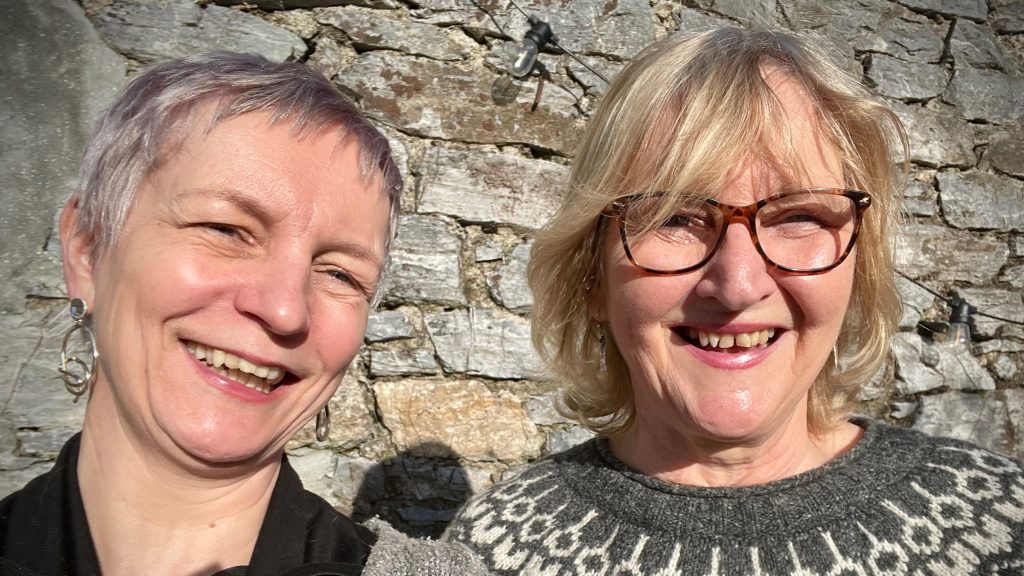
I’m in London in another heatwave, having just completed delivering our Wise Goose ‘Foundations’ in Coaching with Dr Sybille Schiffmann.
I’ll be travelling back to Devon this afternoon, but for now I’m sitting in a café feeling fairly satisfied with our work so far. I’m also trying to capture something difficult to put into words – an exciting moment, when, at a certain point in professional development, something begins to shift.
Earlier in the course, learning to coach understandably focused on doing:
- how to listen well
- how to ask questions
- how to structure a session
- how to intervene skilfully
These things matter. They create safety, credibility, and effectiveness.
But for the trainee coaches in the room, another question began to come into view.
Who am I being when I coach?
This question links to: Why become a coach?
Usually the answer to the second question comes out of an interest in people, a wish to help others reach their potential. Beneath this, though perhaps not quite as conscious, is a desire to understand themselves, a curiosity about their own values and qualities, a wish to grow personally and professionally. I believe this interest in self-development is essential to being an effective and ethical professional coach.
And because the ‘self’ we are developing is multifaceted, fluid, complex and contextual these questions open a rich, layered process.
When technique is no longer enough
I have been coaching for almost four decades, I’m an accredited ‘Master Coach’ yet I still see myself as becoming a coach.
Why is this?
As coaches develop, we often notice a paradox. We have more tools, we know more and feel more competent. And yet, some situations remain stubbornly complex.
Clients bring dilemmas that don’t resolve neatly. Ethical tensions surface. Uncertainty persists even when the “right” questions are asked.
At this stage, progress doesn’t come from adding another technique.
It comes from how the coach shows up. This is the emergent, continuous process of ‘becoming a coach’.
Presence is not a performance
Coach presence is sometimes spoken about as if it were a quality to display; something calm, confident, and reassuring. In practice, it’s more nuanced and demanding.
Presence involves:
- staying engaged when you don’t know what to do next
- resisting the urge to be helpful too quickly
- tolerating silence, uncertainty, and emotional complexity
- noticing your own reactions without letting them run the session
- risking being direct or sharing your experience when it’s neither smooth nor comfortable
This isn’t about being neutral or distant. It’s about being deeply involved without being pulled off centre.
It’s easy to talk theoretically about using ‘self’ as an instrument, but in practice it’s a challenge. It’s not a technique to master.
Presence shaped through tension
One of the less broadcast truths of coaching is that coach identity is formed through tension rather than through certainty.
This happens through moments where:
- you want to help, but know you need to wait
- you sense something important, but don’t yet have the words
- you feel the pull to take sides, and choose instead to stay curious
Over time, these moments shape the coach far more than any framework or model. They cultivate humility, deepen discernment and invite relationship that’s rooted in presence rather than expertise alone.
From “doing coaching” to “being a coach”
At a certain point, the distinction between personal and professional development begins to soften. How a coach listens in sessions begins to resemble how they listen in life. How they stay with uncertainty in their work mirrors how they meet uncertainty personally.
This isn’t accidental.
Even as we teach the basics, we can show this by taking care to ‘hold’ the learning space, at the same time as holding it lightly, often playfully – educating but not being too attached to the role of educator.
What does this look like in practice?
At the simplest level this might look like holding the creative tension between ‘yes’ and ‘no’.
‘Yes’ to the group with all its diversity and difference, creating a safe place to try things out and make mistakes – and modelling this ourselves.
‘No’ sits alongside this and often feels ‘edgier’. ‘No’ can look like holding a boundary. A couple of times over the past days I risked being direct in a way that could unsettle worldviews or expectations of smooth ‘by the book’ professional performances.
This is about being in the room in a way that’s congruent; a natural self-expression. We want to show that coaching at depth draws on the whole person. This goes beyond cultivating skill in applying techniques or a particular ‘right’ approach.
This can be messy. And uncomfortable. But despite the discomfort I want the group to see my missteps and how these can be met, managed and repaired. Ultimately, this way of working can be enjoyable, invigorating and liberating. I think of it as serious play.
I also think of the work as layered.
On the surface we learn self-understanding as we pay attention to the unfolding of a client’s story, and learn to evaluate our competencies, strengths and weaknesses.
Beneath this lies deeper presence; the ways we use ‘self.’
Surrounding this is the interplay of relationships in which both client and coach are embedded – recognising that coach and client are both part of complex dynamic systems.
The ethical dimension of presence
There is an ethical aspect to this movement through competencies, self-awareness and system awareness.
When coaching becomes less about performance and more about presence, the coach is less likely to:
- impose solutions
- rush clients towards action
- collude with narratives that simplify lived complexity
Instead, they become more attentive to:
- what is being protected
- what is at stake
- what might be lost through premature clarity
- where power or agency lie in the wider system
Presence, in this sense, is not just a personal quality.
It’s a professional responsibility.
An ongoing becoming
There is no final arrival point here.
Coach presence is not something we achieve and then possess. It is something we practise, across changing contexts, clients, and stages of life.
It evolves as we evolve.
And perhaps that is the gift of coaching as a profession.
That it continues to shape how we work, and how we live.
Reflective question: In your own coaching or leadership, where might the next stage of development be less about what you learn – and more about who you are becoming?
This post has also been shared as an article on Linkedin