
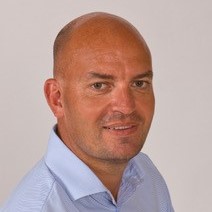
From the Foreign Office to coaching and organisational development, Glyn Botterell’s career has been guided by curiosity and care for people. Discover how Wise Goose training helped him weave coaching into a diverse portfolio and why embracing uncertainty is central to his approach.
What drew you to coaching? The first thing to say is I don’t necessarily see myself as a coach. I worked with people for 25 years in senior positions before I did this coaching programme. I was always interested in developing people, and teams which included coaching. The Wise Goose training helped give more shape to how I do that. I’ve done finance and HR and project management and all these other things which weave in and out of the conversation, so I bring in whatever a person needs at the time.
The big decision I took was when I’d been in the Foreign Office for 12 years and decided to leave. A lot of people, particularly colleagues said ‘Are you mad?’, you know, pension all of that stuff, and a lot of people said ‘Oh, I wish I could do that’ to which my answer was ‘well you could!’ A lot of people said ‘that’s so courageous’ and I struggled with that because it didn’t feel like courage, it felt like I had no choice, I need to do this. I didn’t know what I was going to, I was just leaving something.
Looking back now I can see the thread of how I’ve got here. There was a trajectory, at any point on that journey I could have stopped and stepped off and said ‘now I’m a project manager’ ‘now I’m a coach’ and stayed there. But that never felt right, I think an important part for me has been not stopping and saying ‘now I’m a coach’ and just allowing that to become part of the entirety of what I do. And I do coach, I can put that hat on – one amongst many other hats.
My basic motivation is how many ways can I make a difference, with the belief that each individual has something in them that can make a difference. I’d love to see the world and the people in it flourish, that would be great, and right now, right here, I work with the person in front of me, to make a difference where I can.
How do you use your training now in your work? I work on the principle that there are various parts of me; there is a coaching part of me, plus the mentoring, there’s a part of me which does organisational development, something I’ve also trained in. I go in quite deliberately saying “I don’t know what we’re going to do, I don’t know what you need, let’s discover that together” that’s an important part of the process, then we’ll see what emerges. Sometimes people find that a little odd– “what do you mean you don’t know what we’re going to do?” But there’s a more open space to explore. Part of the work is learning to sit with the uncertainty, we don’t know what the answer is. For leaders, being able to sit within that complexity and uncertainty is increasingly becoming their main competence. I don’t think it’s doing anyone a service to go in with an answer to what they think their problem is.
Can you tell me more about your journey with Wise Goose? I moved to Devon in 2016 to run a charity and through that I met Helen. We regularly met for conversations during that time. As my work was coming to an end I wondered what I was going to do next. I wasn’t keen to work for anyone else, I wanted to work for myself. I’d done coaching already and something in me said ‘I need to get some structure around this and get qualified’. I looked at different programmes and realised Wise Goose fit what I needed. I mostly did the training to give myself confidence that what I was doing anyway made sense, and gain some additional tools. And it did that – it gave me reassurance, “yes I know what I’m doing here”, I knew a lot of stuff already and it gave me some new stuff to work with, and it gave me a group of people that I could practice and learn with. All of that was useful. I’ve stayed in touch with Helen since, that conversation we started years ago has continued and the training has woven in amongst that.
Can you sum up what’s unique about what Wise goose offers? When I was looking into training, I spoke to colleagues, did research and a lot of what I saw was very expensive. Within that expense there seemed to be a promise, a guarantee that you would become something, do a certain type of work and it’d all be great. Wise Goose wasn’t promising any of that, it was offering you a chance to become a well-rounded coach. Not making big promises about where that’d take you next cos that’s kind of up to you. It exposes you to a range of frameworks and methodologies and I like that, inviting you to develop your own approach. If there is a thread, it is the transpersonal element that interested me, linking into that sense of soul, of life purpose and what are you doing in the world, rather than narrow coaching models around improving your sales targets. How can you bring out the invisibles of this individual so they can see the best of themselves? How do they take that into the world to do great work? That was important. Also, the exposure to a range of models and the choices that brings, you synthesise those in your personal way. The size of the groups as well, not too big, you get to know the people you’re working with, that felt important.
I like the motivation behind the training, it’s deliberately kept at a price point that’s affordable. It’s not exclusive. We need to expose as many people as possible to working in this way, Wise Goose is all about getting the work out into the world, not about making lots of money. It’s about how we broaden this work as much as possible, that spoke to my heart. I suppose it was more of a heart than a head decision. But I think it would benefit anybody who wants to become a well-rounded coach, whatever their profession, being able to use a broad range of coaching skills can serve all of us. Wise Goose gives you exposure to that in a way I’ve not seen in other places.